

Vocal Toning Utilizing Vibrational Frequencies
Creating A Resonate Field
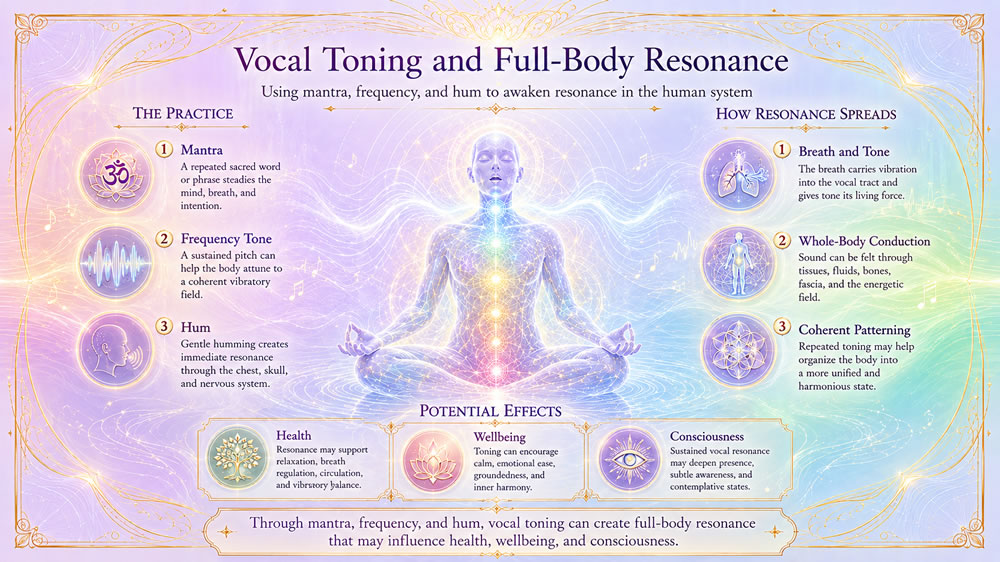
Vocal toning with a specified frequency involves using the voice to produce a sustained pitch that resonates with a predetermined frequency, such as 111 Hz or 528 Hz. This process begins with the intentional selection of a frequency based on its known vibrational qualities and effects on the body, mind, and energy field. When the voice is aligned with this frequency, it acts as both a carrier and amplifier of that vibrational pattern. The human body, composed largely of water and sensitive to vibration, can resonate sympathetically with these tones, facilitating physiological and energetic alignment.
The act of vocalizing a specific frequency engages the breath, diaphragm, and vocal cords in a focused manner, producing not only sound but a vibration that is felt within the body. As the tone is sustained, it stimulates the vagus nerve, calms the nervous system, and brings the brain into coherent states such as alpha or theta. With continued practice, the tone can begin to vibrate in various centers of the body, beginning in the chest or head and gradually expanding to include the whole body. This creates a unified field of resonance, which supports clarity, emotional release, and the balancing of subtle energy centers such as the chakras.
The outcome of this practice is multidimensional. Physically, it promotes relaxation, reduces stress, and can aid in cellular harmonization. Psychologically, vocal toning increases focus and self-awareness while also providing a means of emotional expression and integration. Spiritually, it creates a bridge between the personality and the soul, particularly when the frequency used is in harmony with one’s individual energetic signature. Over time, this tuning process refines the vibratory field of the practitioner, allowing for greater sensitivity, coherence, and alignment with higher states of consciousness.
The process of vocal toning with a specified frequency begins with selecting a frequency known for its healing or harmonizing effects, such as 111 Hz for grounding and cellular coherence, or 528 Hz for heart activation and DNA repair. The practitioner then centers their breath, relaxes the body, and begins to vocalize a sustained tone, typically using an open vowel sound like “AH” or “OM”, while matching the chosen frequency as closely as possible, either by ear or with the aid of a tuning device or tone generator. This tone should be held steadily and with full attention, allowing the sound to resonate within the body.
As the tone is sustained, awareness is directed to where the vibration is felt, starting in the head, chest, or abdomen, and gradually expanding to encompass the entire body. Practitioners may focus the vibration in specific energy centers (chakras) or simply allow the resonance to move intuitively. Repeating the tone in cycles, often for several minutes, allows the body to entrain with the frequency, supporting physiological relaxation, emotional release, and energetic alignment. Over time, this practice cultivates an increased capacity for inner stillness, resonance, and connection with higher aspects of consciousness.