

Rhythm, Movement, and Alignment in Esoteric Meditation
The Ordered Use of Movement as a Vehicle for Spiritual Force
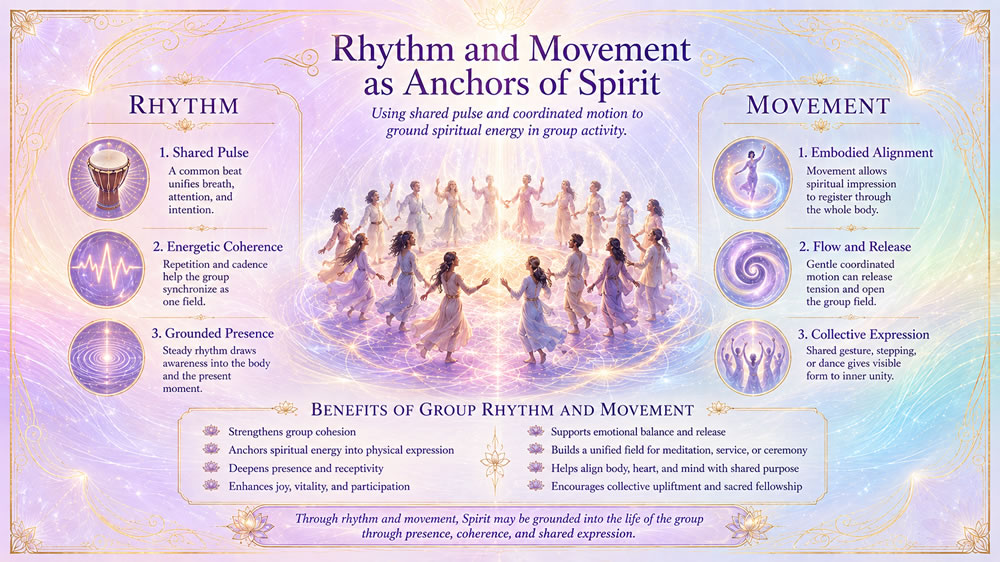
Within the teachings attributed to the Tibetan, rhythm is presented as far more than physical movement or musical cadence. It is described as a form of directed, ordered action capable of bringing an individual or group into alignment with particular streams of force. When movement is performed consciously and in unison, rhythm may affect the physical, emotional, and mental vehicles, while also helping a group establish a unified field through which energy can flow toward a defined spiritual purpose.
From this perspective, rhythmic movement works through alignment, adjustment, and synthesis. The teaching states that rhythm can influence the distribution of force within the body, alter the condition of the emotional and mental vehicles, and either improve or disturb the alignment between the personality and the higher nature. Its true esoteric purpose is therefore not movement for stimulation alone, but movement employed as an intelligent aid to integration. When rightly used, rhythm becomes a means of bringing the lower vehicles into greater relationship with the soul or causal consciousness.
This principle becomes especially significant in group meditation. When individuals are united by a common intention and participate in coordinated rhythm, sound, and movement, the teaching describes their separate auras as blending into a more unified group field. In such a condition, the group may function as a channel rather than merely as a collection of individuals. The Tibetan uses the Wesak Festival as an example, describing sound, chanting, measured movement, and united intention as contributing to the formation of a channel through which spiritual force may be transmitted.
Sound and movement are therefore closely related. The teaching anticipates a time when music, chanting, rhythm, and coordinated movement will be studied more systematically for their creative and purificatory effects. Their influence upon the physical, emotional, and mental nature would be observed, along with the way different forms of ordered activity interact with centers of force and with the overall alignment of the human instrument. What is suggested is an eventual science of spiritual rhythm: not performance for its own sake, but the intelligent use of coordinated sound and motion in the service of consciousness.
A further principle is that such work is not intended solely for the development of the participants. The Tibetan describes groups eventually learning to receive, qualify, and distribute spiritual force for constructive service in the world. The group becomes a focal point through which energy may be directed toward a larger purpose. The effectiveness of this activity depends upon genuine cooperation, diminished personality emphasis, and increasing alignment with the higher consciousness.
The teaching also suggests future applications in healing, education, spiritual ceremony, and collective service. In each case, the underlying principle remains the same: individuals first establish alignment, then unite rhythmically, and finally become receptive to a higher source of impression or energy. In education, for example, rhythmic alignment is envisioned as strengthening the relationship between higher and lower mind and assisting the awakening of intuition.
For the contemporary student, the most important lesson may be found in the principle rather than in attempting to reproduce advanced esoteric techniques. Rhythm can be understood as a means of creating order within consciousness. Breath, posture, gentle movement, chanting, walking meditation, or coordinated group activity can all become vehicles for attentiveness when they are approached with purpose and restraint. The goal is not stimulation, spectacle, or emotional excitement, but increasing coherence: body, emotion, mind, and intention gradually learning to move together. In this sense, rhythm becomes a living expression of alignment, movement brought into harmony with consciousness, and consciousness brought into service.